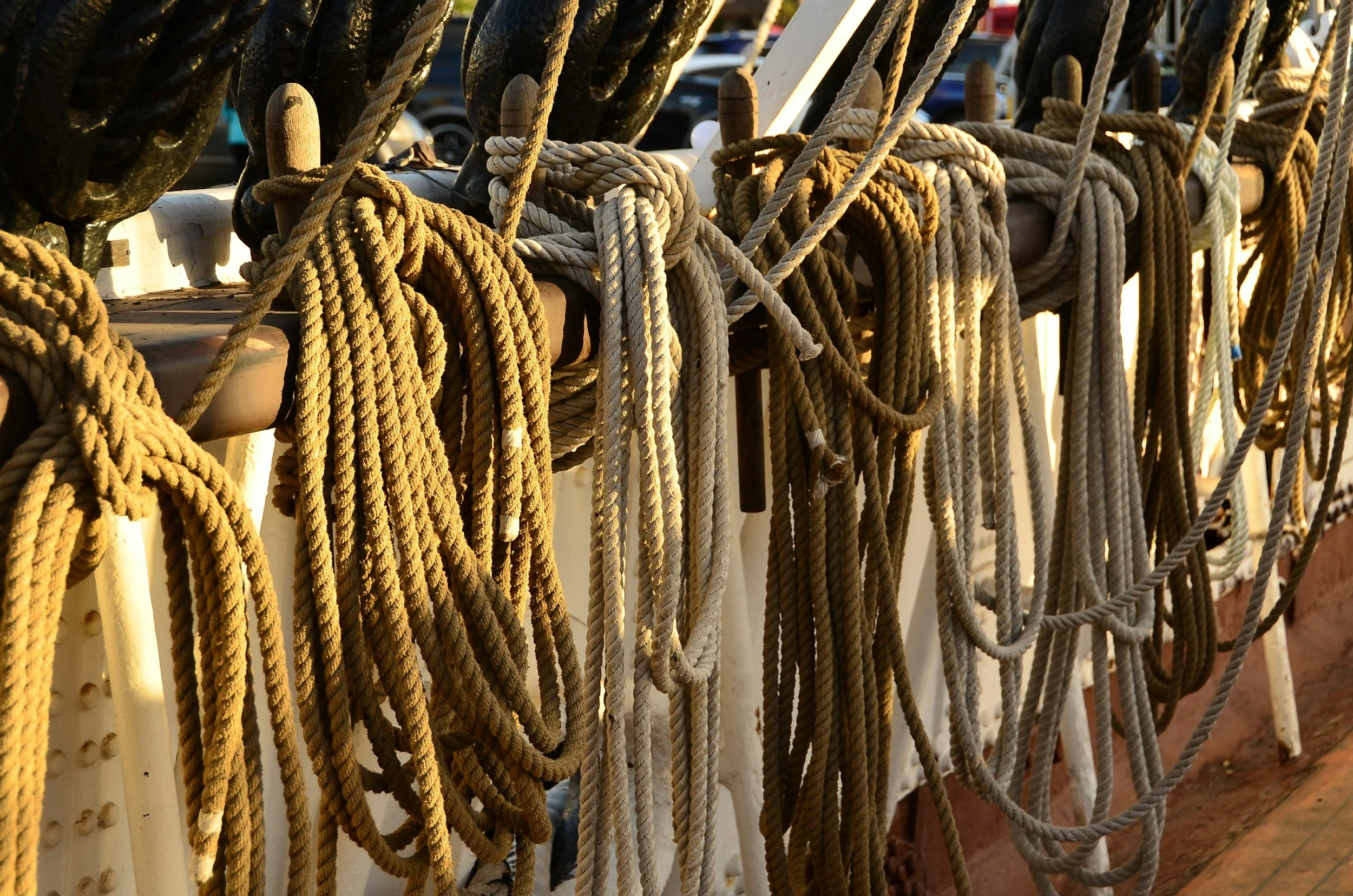
Units of rope are more commonly referred to as hanks or bundles. They come in many different sizes, and lengths.
Traditional shibari ropes are about 26 ft (8 m) long, while many Western/American ropes are closer to 30 ft (9 m). With the typical diameter being ¼ inch (~6 mm).
Ropes can be thicker, longer, and/or tighter based on individuals preferences.
There are two main categories for rope:
Natural Ropes
Jute – Traditional shibari rope. Light weight gives a good flow, slightly abrasive (“bite”) but softens with use.
Hemp – Stronger than jute (higher fiber density). Similar bite; softens over time. Popular for beginners and experts.
Cotton – Soft, stretchy, cheap, beginner-friendly. Stretch can loosen knots; weaker than jute.
Coconut – Very rough and weak; made from coconut husk fibers. Mostly used for torment style play.
Synthetic Ropes
Nylon – Strong, smooth, shiny, durable. “Nylon” varies by fiber mix, so feel/look can differ between vendors.
MFP (Multi-Filament Polyester) – Shiny low cost alternative to nylon. Weaker and wears into a fuzzy texture. Common for decorative or beginner use.
POSH (Portside Out, Starboard Home) – Synthetic rope that looks natural. Strong, durable, popular in the rope community for suspension lines.
Bamboo Silk (Rayon) – Soft and slightly stretchy like cotton; considered more luxurious. Best for ground ties and 'comfy' rope.
Hempex – Synthetic rope that looks natural. Rough on hands; fraying can cause micro-cuts. Largely replaced by POSH.
For more information on rope types and their strengths/weaknesses. Check out the Online Resources tab or reach out directly!
"What's the best rope to start with?"
Our answer: “The best rope is the rope you like tying with most”
Every rope is different in how it feels. Majority of the time it comes down to personal preference of the top & bottom. We generally recommend asking other people about what rope they like to use and why. As well as feeling the different kinds of rope by hand. The weight, tightness, feel, etc. One can go to a hardware or hobby store and get a feel for ropes there even.
At Wild Weave Studios we keep a selection of samples to not only show everyone the ropes but for everyone to get a hands on feel at any time.
If I had to pick one, hemp is the best rope to start with in my opinion. As it has a balance of strength, feel, durability, and functionality that can be built upon across your own rope journey.
Common strength values:
Values provided below are average tensile strength based on ¼” diameter ropes:
Jute ~300lbs
Hemp ~400lbs
Cotton ~230lbs
Coconut ~25-75lbs
Nylon ~1400lbs
MFP ~700lbs
POSH ~1200lbs
Hempex ~1100lbs
Note, these are only to help demonstrate the comparable strength and not to assume ‘rated strength’. These do not include factors such as fatigue, loading conditions, or knot effects. Values may vary based on source and reporter.